
Can You Hear Me Now? The Art of the Voice Note
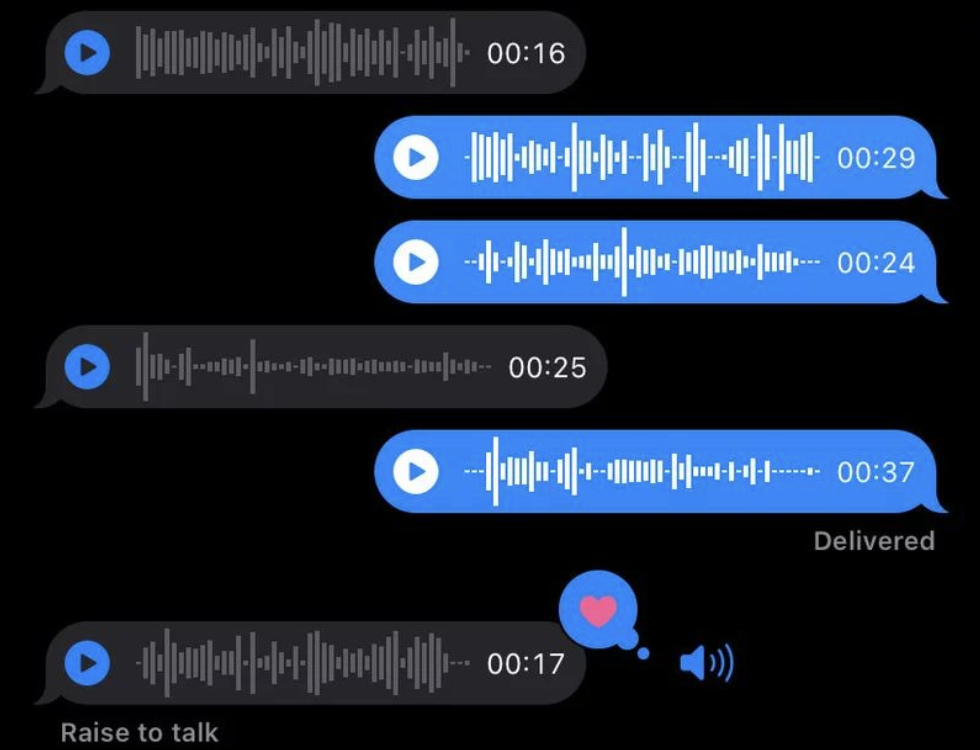
Photo from Pinterest
There was a time when receiving a five-minute voice message from a friend would have felt slightly terrifying.
Now? You press play.
Somewhere between the death of the traditional phone call and the exhaustion of typing out every single thought, voice notes have quietly become one of the favorite ways for generations to communicate. Instead of sending a paragraph-long text, we send a three-minute audio memo explaining what happened in class, why we're annoyed with someone, what we want for dinner and, somehow, a completely unrelated story from 2019.
We at The Edge know that feeling all too well. Between classes, work, clubs, assignments and trying to maintain some semblance of a social life, sometimes typing out an entire story feels like more effort than it is worth. So why not just hit record?
Voice notes make sense for a generation that has grown up communicating asynchronously. We don't necessarily need an immediate response. We just want to tell you the story while it's still fresh in our heads.
And sometimes, typing “WAIT. You are not going to believe what just happened” does not fully capture the emotional range of the situation.
Talking Is Faster Than Typing
Part of the appeal is simple: voice notes are convenient.
Talking is faster than typing, especially when you have a lot to say. A voice memo also allows for tone, pauses, laughter and the occasional dramatic sigh that would otherwise require an entire collection of emojis.
A five-minute voice note can contain an entire conversation that would have taken twice as long to type. You can send one while walking across campus, getting ready for class or making dinner. It doesn't require you to stop everything you're doing and have a conversation right that second.
But there is something more personal about hearing someone's voice.
A text can tell you that your friend is upset. A voice note can let you hear that they’re trying not to laugh while telling you why they’re upset.
Maybe that's part of what makes them so appealing. Voice notes give us the convenience of texting without completely losing the personality of an actual conversation.

Photo from GPost
The Unwritten Rules of the Voice Note
Of course, once something becomes a regular form of communication, it develops its own etiquette.
Rule #1: Know your audience.
Not everyone wants to receive a seven-minute audio file while sitting in a silent library. Your best friend might happily listen to your latest life update. Your group project partner probably does not need the director's cut.
Rule #2: Do not send a voice note that could have been one sentence.
If the entire message is “okay, sounds good,” we probably did not need the audio.
Rule #3: Context matters.
If someone sends you a voice note, responding with “lol” is basically the audio equivalent of leaving someone on read. If they just spent four minutes telling you a story, give them something back. If not? Well then, this is probably the first and last voice note you’ll receive from that person. Kiss your voice note privileges goodbye!
And then there is the ultimate voice-note question: How long is too long?
Three minutes? Reasonable.
Five minutes? You better have a plot.
Eight minutes? This is no longer a voice note. Baby, this is a podcast episode.
Press Play When You Have the Time
There is also an entirely different skill involved in receiving one. You have to find the right moment to listen.
Unlike a text, you can't casually glance at a voice note while your professor is talking or while standing in line at Starbucks. Suddenly, you're calculating whether you have enough privacy to hear your friend explain their latest relationship crisis without the entire room knowing.
Voice notes ask for a little more attention than texts, even if they don't require an immediate response. That's part of the tradeoff. You can listen whenever you have the time, but you actually have to listen.
Maybe that's why they can feel more intimate than texting. You aren't just reading someone's words. You're hearing how they say them.
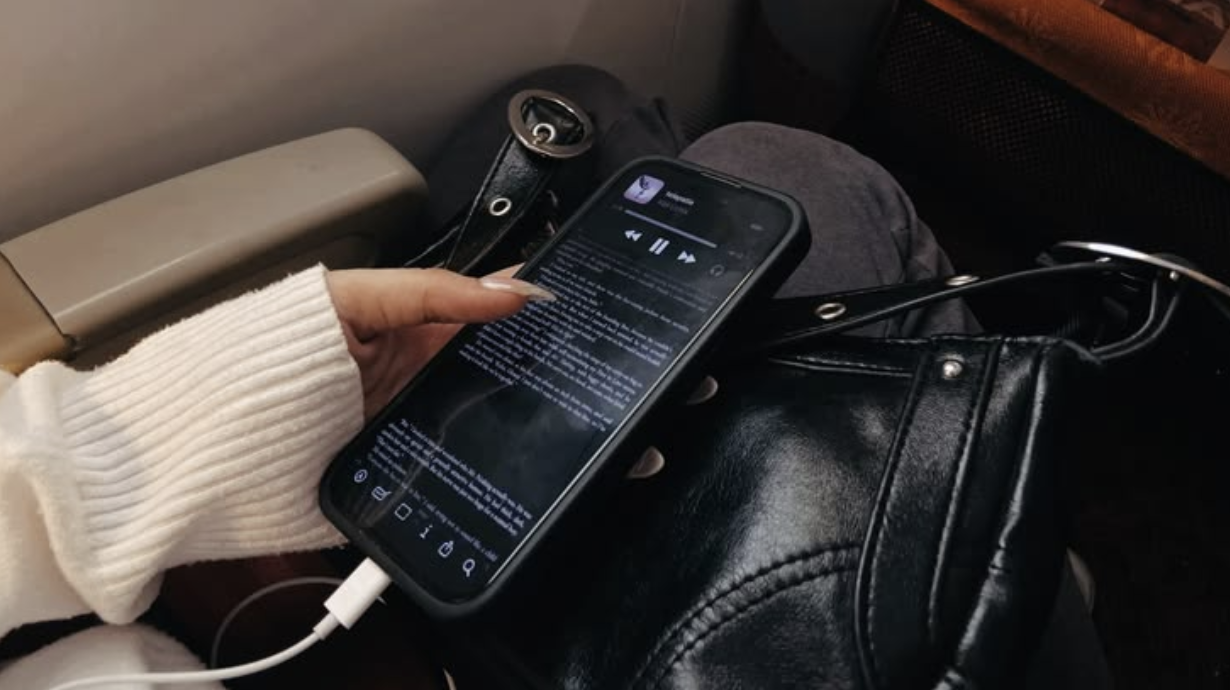
Photo from Pinterest
Caught in between a Text and a Call
The popularity of voice notes says something interesting about how we communicate now.
We want the convenience of texting without losing the personality of an actual conversation. We want to respond when we have time, but we still want to hear each other. We want asynchronous communication, but we don't necessarily want it to feel impersonal.
The audio memo fills that weird space between texting and calling.
There is the casual voice note, sent while walking across campus. The angry voice note, recorded immediately after something happens. The “I have way too much to type” voice note. The late-night voice note that somehow turns into a thirty-minute emotional monologue.
And then there is the voice note that starts with, “Okay, so…”
You already know you're in for a story.
Maybe that's why the five-minute voice note has become its own art form.
It's not replacing texting or phone calls completely. It's creating another way to communicate for people who want the flexibility of a text and the personality of a conversation.
For a generation that is constantly connected but somehow always busy, that balance might be exactly what we want.
So the next time your friend sends you a five-minute voice note, don't panic.
Find your headphones.
Press play.
And whatever you do, don’t respond with “lol” after minute four.

Photo from Pinterest
What are your voice note rules? Are five minutes completely reasonable or an unforgivable amount of audio? Share your thoughts with us and tag @theedgemag on Instagram to be featured!